
Fluid mechanics is a branch of physics that deals with studying fluids and their behaviour under different conditions. One of the most fundamental concepts in fluid mechanics is Reynolds number, a dimensionless quantity that describes the flow of fluids in different systems. In simple terms, Reynolds number helps predict fluid flow transition from laminar to turbulent. The equation for Reynolds number involves various parameters such as velocity, density, viscosity, and characteristic length, which are crucial in understanding the behaviour of fluids in different applications. In this article, we will look closer at the importance of Reynolds number in fluid mechanics and explore the equation in detail. Whether you are a student, researcher, or practitioner in the field of fluid mechanics, understanding Reynolds number is essential for predicting fluid behavior and optimizing fluid systems for optimal performance.
Hydraulic calculations for fire protection engineers
This series of tutorials covers the basics of hydraulics calculations related to fire protection engineering. It covers useful hydraulic formulas, such as discharge from a sprinkler head ( K-Factor), Bernoulli's Theorem, Water Density and the pressure loss formula Hazen-Williams.
Fire protection engineers and designers need to understand the principles of hydraulic calculations and analysis to fully benefit from using full hydraulic calculations in fire protection systems such as fire sprinklers, water mist and other types of water-based extinguishing systems.
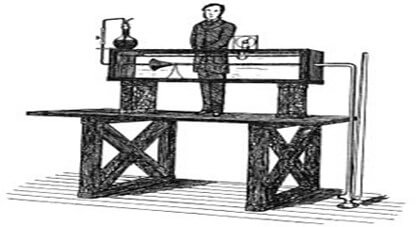

This article, 'How to calculate a fire sprinkler system' for a simple tree system with three heads and three pipes, will demonstrate some of the basics you need to know and show you how to use the k-factor & Hazen-Williams equations.
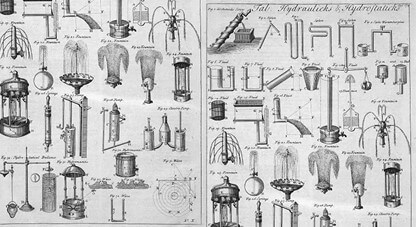
Hydrostatics is a branch of hydraulics that deals with fluids at rest. As mentioned earlier, water is the most critical component of fire protection and hydraulic calculations so this section will look at the water at rest.

One of the most important concepts in fire sprinkler design is the principle of design density, yet many fire sprinkler system design engineers do not fully understand the concept. This short instruction will hopefully full fill this requirement.
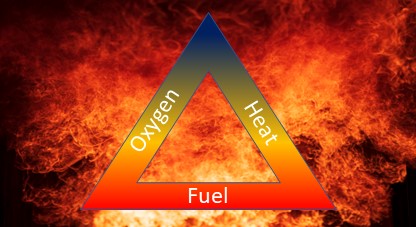
Water is often the first choice for firefighters and emergency responders when putting out fires. But why is water such an effective fire-extinguishing agent? This article explores the science behind water's ability to quench flames and keep us safe.
Bernoulli's Theorem is a fundamental principle in fluid dynamics that describes the relationship between the pressure and velocity of a fluid.
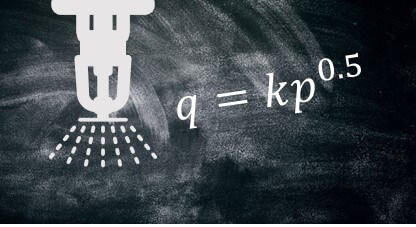
In this article, we are looking at the flow of water through an orifice, and we will define the orifice as an opening (with a closed perimeter) in an element of a flow system. This orifice will be a fire sprinkler head or water mist nozzle in a fire protection system. We can use the k-factor formula for almost any rounded orifice.

The Hazen-Williams equation is empirical and has long been used to calculate the friction loss in pipework for water-based fire sprinkler protection systems.

Some fire sprinkler design authorities and design standards, such as EN 12845, limit the velocity through pipes and valves in fire sprinkler systems.

A to Z of commonly used terms in fire sprinkler protection.